October 16, 2026
Your vehicle's suspension system is designed to keep tires firmly in contact with the road while absorbing impact from bumps, potholes, and uneven pavement. Over time, components like shock absorbers, struts, control arms, and ball joints gradually wear down from constant mechanical stress. When these parts begin to fail, the vehicle's structural stability and handling characteristics degrade rapidly, leading to noticeable changes in drive quality. Homeowners and commuters alike often notice that their ride becomes excessively bumpy, harsh, or unstable during basic daily drives. Recognizing these physical warning signs early allows drivers to address safety risks before minor component wear causes severe damage to tires, steering systems, and wheel assemblies.
Identifying the Classic Signs of Damaged Shocks and Struts
Shocks and struts play a crucial role in dampening the kinetic energy generated by road movement. When internal seals leak hydraulic fluid or internal valves fail, these components can no longer stabilize the weight of the vehicle. Drivers frequently experience a bouncing effect where the car continues to oscillate long after passing over a single road bump. Another severe warning sign is excessive body roll, where the vehicle leans heavily to one side while negotiating sharp corners or highway exit ramps. Furthermore, worn struts cause nose-diving when applying the brakes hard or squatting toward the rear axle during acceleration. Scheduling timely suspension repair restores proper damping force, keeping the chassis level and maintaining vehicle control during sudden maneuvers.
Evaluating Steering Instincts and Vehicle Alignment Issues
A compromised suspension system directly impairs steering precision and vehicle tracking. If you find yourself constantly correcting the steering wheel to keep your vehicle driving straight down a level road, your alignment or control arm bushings may be failing. Faulty ball joints, worn tie rod ends, or loose sway bar links can create a drifting sensation that makes turning feel sloppy or unpredictable. When worn tie rod ends develop internal play, the front wheels can toe inward or outward independently, causing the vehicle to wander across lane lines unexpectedly.
Drivers may also notice unusual resistance, heavy steering at low speeds, or a pronounced delay between turning the wheel and the vehicle responding. This delayed response often stems from deteriorated rubber bushings that compress and flex excessively before transferring steering force to the wheels. When control arms or subframe bushings deteriorate, alignment angles shift out of factory specification. Arranging for suspension repair corrects these geometry imbalances, protecting your steering linkages from accelerated wear and ensuring predictable handling in all driving conditions.
Spotting Uneven Tire Wear and Visual Structural Damage
Uneven tire tread wear is one of the most reliable visual indicators of underlying suspension trouble. When shocks or alignment angles are compromised, the tire no longer rests evenly against the asphalt, causing specific sections of the tread to wear down prematurely. Inner or outer shoulder wear usually indicates improper camber or toe alignment settings, while feathering across the tread ribs suggests that the tire is scrubbing sideways down the road surface. Cupping or scalloping patterns, which appear as high and low spots across the tread surface, occur when a failing shock absorber allows the wheel to bounce down the highway. Because the tire briefly loses contact with the pavement on every bounce, small sections of rubber are gouged out over thousands of miles.
Additionally, drivers should perform a visual check underneath the vehicle to look for wet, oily shock bodies, cracked rubber boots, or metal-on-metal scraping marks. Leaking fluid indicates that internal hydraulic seals have breached, leaving the shock unable to dampen spring oscillations. According to IBISWorld, there were 299,348 auto mechanics in the US businesses as of 2024, an increase of 1.5% from 2023. This steady industry growth reflects how vital qualified technical care remains for maintaining complex automotive chassis systems.
Understanding the Dangers of Delayed Mechanical Maintenance
Ignoring suspension repair warning signs creates significant safety hazards for vehicle occupants and other road users. Compromised shocks increase stopping distances significantly because uneven tire contact reduces the friction available for braking. On rough or uneven roads, a bouncing tire loses continuous contact with the pavement, meaning emergency anti-lock braking systems cannot function at maximum efficiency. In wet weather, worn suspension parts increase the risk of hydroplaning because the tires cannot pump water away from the contact patch effectively. Without firm downward pressure from functional struts, water accumulates under the tread, causing the vehicle to skim across the road surface without traction.
Furthermore, driving on broken springs or completely failed ball joints can lead to catastrophic wheel detachment, leaving the driver unable to steer or brake safely. When a ball joint pops out of its socket at speed, the wheel drops outward, often ripping out the drive axle and destroying the fender in the process. Delaying necessary suspension repair also forces neighboring components, such as wheel bearings, CV axles, and steering racks, to absorb excessive vibration, turning a straightforward component fix into an expensive overhaul.
Restoring Handling Control with Professional Technical Services
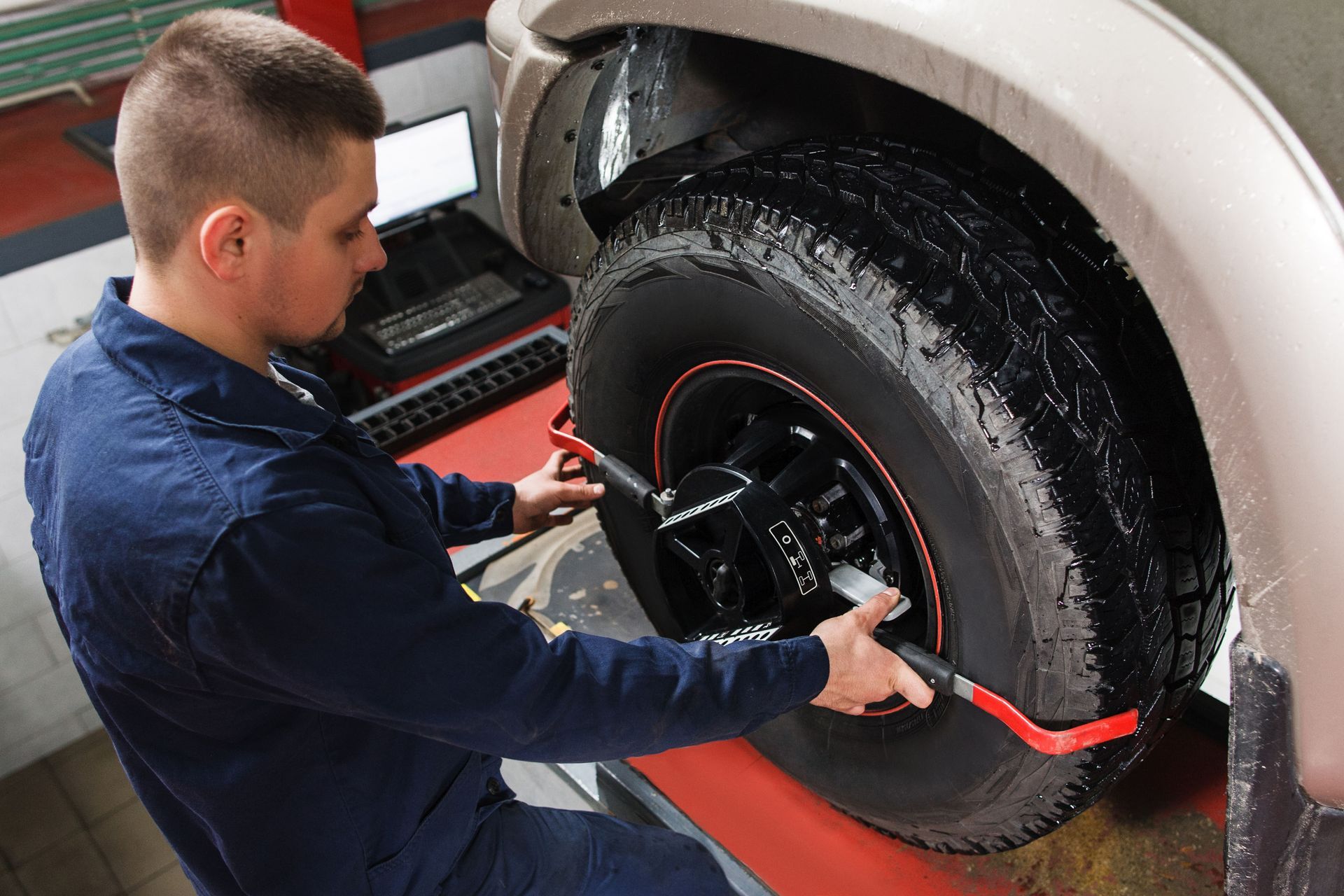
Properly diagnosing and repairing suspension issues requires specialized hydraulic presses, alignment racks, and heavy-duty spring compressors. Attempting complex chassis repairs at home without commercial-grade gear poses severe injury risks, particularly when working with high-tension coil springs that require massive compression force to assemble safely. Professional suspension repair technicians evaluate every component of the chassis, including coil springs, leaf springs, stabilizer bars, bushings, and mounting hardware. They utilize specialized diagnostic equipment to measure frame clearance and suspension geometry, ensuring no underlying structural bends go unnoticed.
Replacing worn shocks in matched pairs ensures balanced handling across both axles, while post-repair digital wheel alignment restores factory tracking angles. Installing new components without recalibrating toe, camber, and caster angles causes premature tire scrub and pulling. Choosing comprehensive professional service guarantees that high-stress fasteners are torqued strictly to manufacturer specifications, eliminating dangerous play and restoring factory ride quality. Certified specialists also inspect rubber bushings and ball joint boots for hair-line dry rot, preventing early joint contamination. Investing in expert maintenance ensures your vehicle remains reliable, comfortable, and safe for every passenger on board.
Securing Your Drive with Local Automotive Specialists
Maintaining a smooth, quiet, and safe vehicle requires attention to detail, quality replacement hardware, and skilled diagnostic care. Driving on compromised shocks, failing control arms, or misaligned wheel assemblies puts unnecessary strain on your vehicle and compromises passenger safety. Neglecting early warning signs often leads to cascading mechanical failures, prematurely ruined tires, and exponentially higher repair costs down the road. By addressing suspension issues promptly, you protect your automotive investment, improve fuel efficiency, and ensure every daily commute remains comfortable and predictable.
Our experienced team brings advanced diagnostic tools, industry-leading replacement parts, and deep technical knowledge to every job site. We take the time to perform thorough multi-point chassis evaluations, pin-point the root cause of handling issues, and explain recommended fixes clearly before work begins. Whether your vehicle requires routine alignment work, strut replacements, or complete bushing overhauls, we deliver reliable, long-lasting solutions tailored to your vehicle make and model.
If your car exhibits excessive bouncing, uneven tire wear, steering drift, or unusual clunking noises over bumps, trust the certified suspension repair technicians at Precision Auto Center to restore your vehicle handling. Contact Precision Auto Center today to schedule your comprehensive chassis evaluation and keep your vehicle operating safely on every road.